



A Practical Guide to Brown Sugar Cube Packaging
Introduction
Brown sugar cubes, sometimes called brown sugar blocks or pressed sugar bricks, are widely used in tea, traditional drinks, desserts, and home cooking. Compared with refined white sugar, they retain more molasses and natural components, which gives them a deeper color, richer aroma, and slightly sticky texture. These attractive product properties also bring extra challenges to packaging: brown sugar cubes are more sensitive to moisture, more likely to stick together, and more prone to edge breakage if handled roughly.
Modern brown sugar cube packaging is no longer just about getting the product into a bag. It is about controlling moisture, protecting shape and surface, meeting labeling and weight regulations, and doing all of this efficiently. That is why many producers now adopt an automatic solution built around a premade pouch packaging machine combined with a multihead weigher, especially when the product is aimed at retail markets.

Product Characteristics and Packaging Challenges
From a packaging engineer’s perspective, brown sugar cubes are a product that sits between “dry, free-flowing granules” and “soft, cohesive blocks”. They are denser than loose sugar, but their slightly higher moisture and molasses content make the surface more tacky and more sensitive to environmental humidity. If the packaging material does not provide a sufficient moisture barrier, cubes can slowly absorb water from the air, softening and sticking to one another; in low humidity, they may dry out and become more brittle, which increases the risk of chipping and powder formation.
Transport and storage add another layer of complexity. Stacked cartons, palletized loads, and long-distance shipping expose the packs to pressure and vibration. If the film is too thin or the bag is not well supported, some cubes can crack or rub against each other and create fine sugar dust inside. At the same time, the packaging line must ensure that every bag meets the declared weight or piece count, and that the sealing area stays clean despite occasional crumbs. All of this explains why brown sugar cubes need packaging that combines barrier performance, mechanical strength, and gentle handling.
Common Packaging Types and Materials for Brown Sugar Cubes
In the market, brown sugar cubes are usually found in flexible bags and pouches. Pillow bags are common for simple retail formats, while stand-up and zipper pouches are often used where brand image and consumer convenience are more important. Below is a reference table summarizing typical choices.

Brown Sugar Cube Packaging Reference Table
Packaging Type | Material Composition | Advantages | Typical Applications |
Pillow Bag | BOPP/PE or BOPP/CPP | Cost-effective, suitable for high-speed packing | Small retail packs, food service portioning |
Stand-Up Pouch | PET/PE or PET/AL/PE | Good barrier, strong shelf presence, reclosable | Supermarket retail, premium brown sugar |
Flat Pouch | PET/PE or Nylon/PE | Simple structure, good sealing, easy stacking | Mid-size packs, traditional markets |
Zip-Lock Pouch | PET/PE with zipper closure | Resealable, convenient for repeated use | Home baking, tea and beverage consumers |
Jar | PET or Glass Jar + Screw Lid | Strong protection, moisture-proof, high shelf appeal, excellent for premium gifting | High-end retail, gifting boxes, long-term storage |
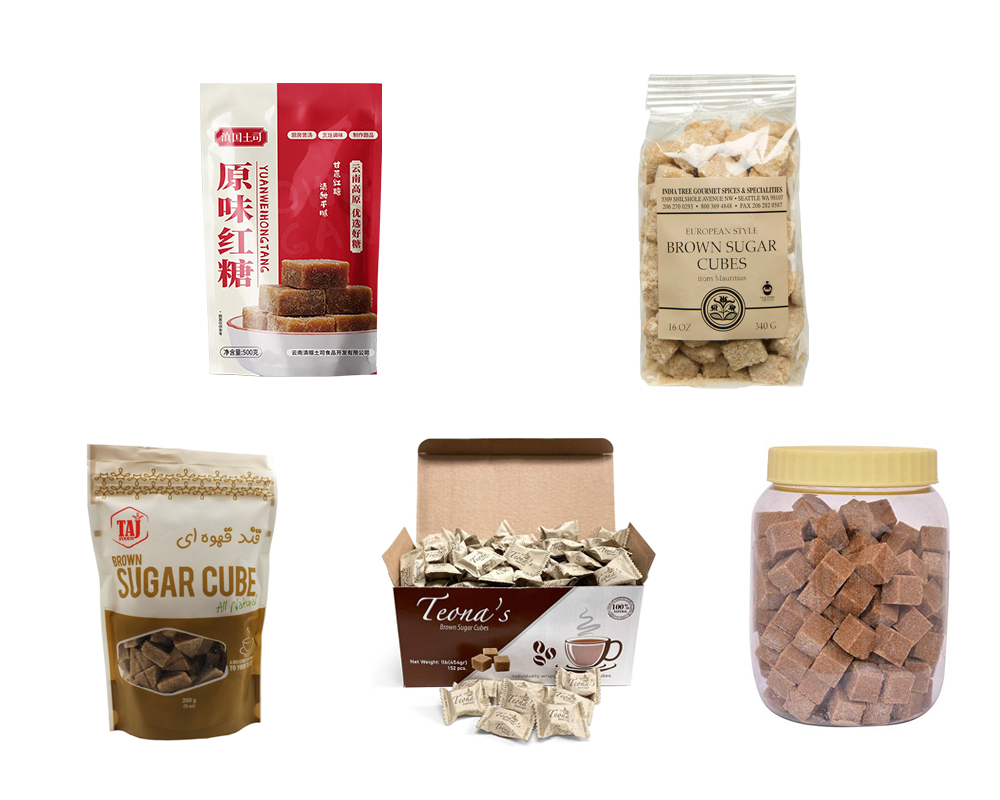
The choice between these formats depends on the product’s positioning and distribution channel. Pillow bags are suitable for price-sensitive markets and fast-moving, high-volume production. Stand-up pouches, particularly those with aluminum in the laminate, are better where longer shelf life and stronger visual impact are required. Zipper pouches are often preferred when the product is meant to be opened and reclosed many times in home kitchens.
How Premade Pouch Packaging Fits Brown Sugar Cubes
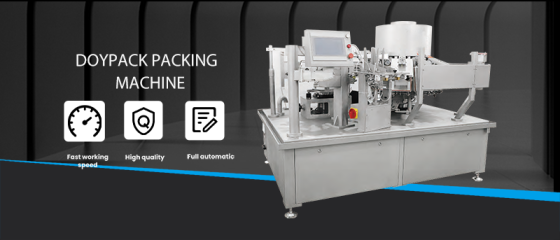
A premade pouch packaging machine is especially well matched to brown sugar cubes because it allows more robust pouch structures, neat pack appearance, and controlled product handling. Pouches are made in advance, stacked, and then fed into the machine. At each station, mechanical grippers pick up a pouch, open it with suction, hold it in a stable position, and then receive the product from above.
When this system is combined with a multihead weigher, the process becomes precise and consistent. Cubes are gently fed to the top of the weigher, distributed into multiple weighing heads, and then released as a combination that matches the target weight. Because the weigher calculates the optimal combination for each cycle, it reduces both underfilling and excessive giveaway . From there, the product falls through a filling chute into the open pouch. If the chute is designed with smooth contours and an appropriate drop height, cube breakage and dust generation can be kept to a minimum.
Once filled, the pouch passes through sealing stations where the top is closed with controlled temperature, pressure, and dwell time. This step is critical not only for preservation but also for mechanical strength during transport. A good seal prevents moisture ingress and keeps the bag from opening when cartons are stacked or when consumers handle the product on the shelf.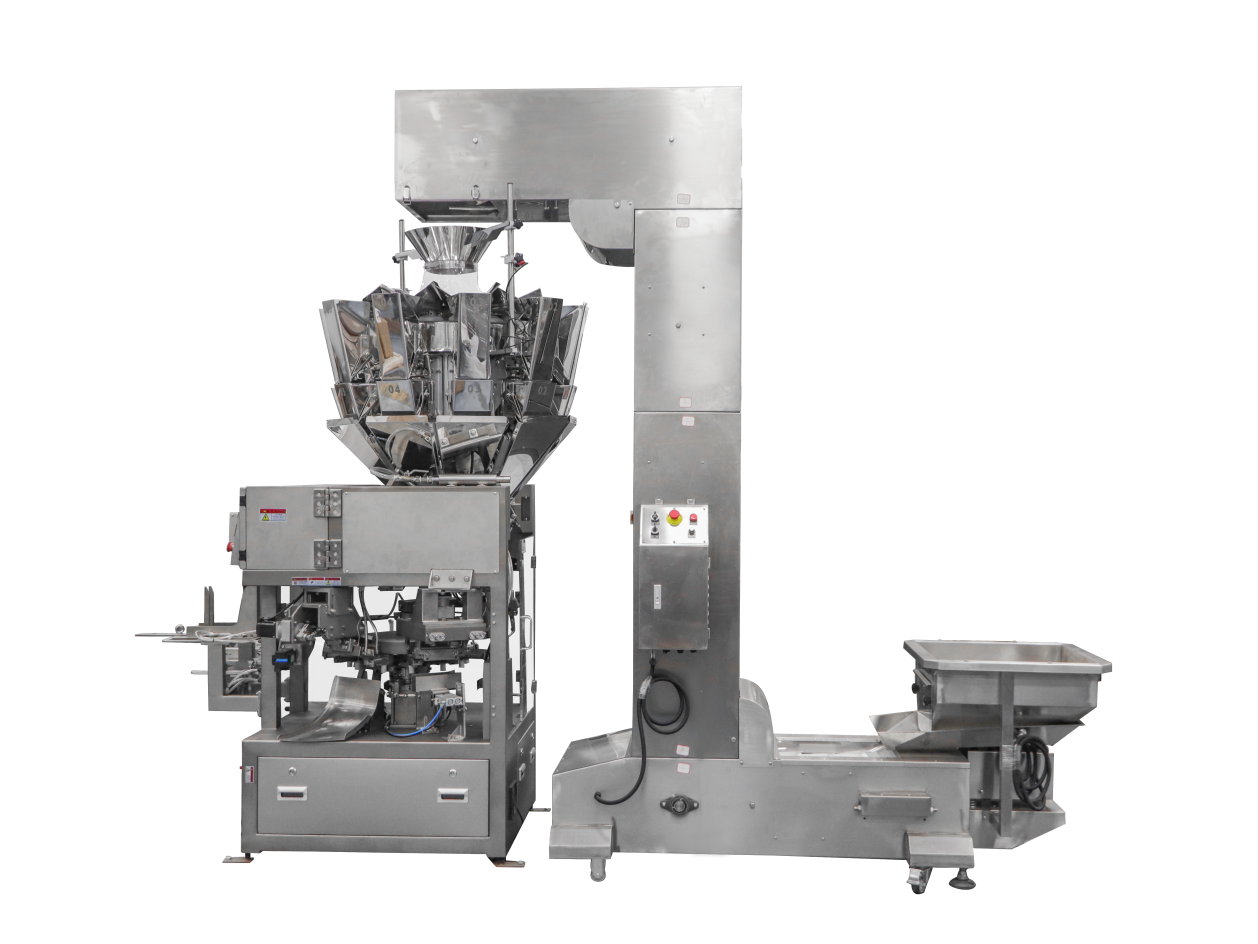
Process Flow: From Cube to Finished Pouch
A typical brown sugar cube packaging line can be viewed as a sequence of carefully coordinated stages rather than as separate machines. After pressing and forming, the cubes are usually conditioned for a certain time so that moisture and hardness stabilize. They are then transported via conveyors or an elevator to the infeed of the combination weigher. In many cases, vibrating channels or guides are used to spread the product evenly and prevent clumps from entering a single path.
As the weigher doses the product and releases it into each pouch, the premade pouch machine must stay synchronized with the weighing cycles. Modern control systems allow the weigher and the packaging machine to exchange signals so that they run at matching speeds. Downstream, printers add date and batch codes, and checkweighers or vision systems may be used to verify that the filled pouches meet specifications. Finally, the individual bags are placed into cartons or outer packaging that is designed to support stacking and protect the inner packs from impact.

Food Safety, Hygiene, and Regulatory Aspects
Although brown sugar is a relatively low-risk food in terms of microbiology, packaging still needs to comply with food contact regulations and basic hygiene requirements. This means films and laminates must be approved for food use, adhesives and inks must not migrate in harmful amounts, and all product-contact surfaces on the equipment should be easy to clean. The presence of fine sugar dust makes design details around the sealing jaws and filling chute particularly important; residues in these areas can affect seal integrity and overall cleanliness if not managed properly.
Traceability is another key aspect. Most modern premade pouch machines and weighing systems can be integrated with coding devices and data logging software so that each production lot is linked to specific dates, machine settings, and even packaging materials. In the event of a complaint or recall, this information helps producers respond quickly and accurately.
Sustainability and Market Direction in Brown Sugar Packaging
Sustainability is becoming increasingly visible in the sweetener and sugar category, and brown sugar is no exception. Many brands are evaluating ways to reduce plastic use, for example by optimizing film thickness, switching to higher-strength but lighter laminates, or exploring mono-material structures that are more compatible with recycling streams. At the same time, design trends often emphasize a “natural” or “traditional” look to match consumer expectations of brown sugar as a less refined product.
From an operational perspective, automated premade pouch lines combined with multihead weighers can also contribute indirectly to sustainability by reducing product giveaway and minimizing packaging defects that would otherwise lead to rework or waste. When machines are properly adjusted, each pouch contains just the right amount of sugar cubes, and each roll of film or stack of bags is used as efficiently as possible.
Conclusion
Brown sugar cube packaging is a good example of how product characteristics drive technical decisions in packaging design and equipment selection. The combination of moderate moisture, compressible structure, and sensitivity to environmental conditions means that the packaging system must protect both the physical integrity of the cubes and their sensory qualities over time.
By pairing a premade pouch packaging machine with a multihead weigher, producers can achieve accurate dosing, controlled handling, and strong, repeatable sealing, all within a format that supports branding and consumer convenience. When this is combined with suitable pouch materials, thoughtful line design, and attention to hygiene and sustainability, brown sugar cubes can travel from factory to consumer in a stable, attractive, and reliable package that meets both market and regulatory expectations.
Related Cases
More >-
![A Practical Guide to Laundry Pod Packaging: Materials, Protection, and Modern Packing Solutions]()
A Practical Guide to Laundry Pod Packaging: Materials, Protection, and Modern Packing Solutions
Laundry pods require packaging that aligns with regional safety standards. Markets like the US and EU often require child-resistant closures, clear warning labels, and high-barrier materials. Asian markets emphasize fragrance retention and transport stability. Across all regions, consistent sealing, material safety, and traceability are key quality measures. Sustainability is also becoming a major focus in this category. Many brands are now exploring recyclable films, lightweight pouch designs, energy-efficient sealing systems, and reduced-plastic structures, pushing the industry toward greener packaging solutions.
-
![A Comprehensive Guide to Gummy Packaging: Materials, Technology, and Best Practices]()
A Comprehensive Guide to Gummy Packaging: Materials, Technology, and Best Practices
Gummy packaging is a technically nuanced process involving barrier materials, portion accuracy, moisture control, and aesthetic design. By understanding the science behind product preservation and selecting the right packaging equipment—whether a premade pouch system for premium products or a VFFS line for high-speed production—manufacturers can ensure both product quality and efficiency. As consumer demand for gummies continues to grow, the packaging industry will play an increasingly vital role in shaping the safety, sustainability, and convenience of these popular treats.
-
![Exploring the 4-Station Premade Pouch Packaging Machine: Compact, Flexible, and Smart]()
Exploring the 4-Station Premade Pouch Packaging Machine: Compact, Flexible, and Smart
As automation technology continues to evolve, compact machines like the 4-station premade pouch packaging unit highlight how efficiency, intelligence, and flexibility can coexist in a single system. For small producers seeking a balance between productivity, precision, and affordability, this type of equipment offers a sustainable path toward modern packaging automation—helping businesses grow without outgrowing their space.
-
![The Science Behind Spicy Strips Packaging: From Material Selection to Automation Solutions]()
The Science Behind Spicy Strips Packaging: From Material Selection to Automation Solutions
Spicy strips packaging reflects the growing sophistication of the snack food industry. By integrating manual feeding with automated sealing, manufacturers achieve a perfect balance between efficiency, hygiene, and cost control. As consumer demand for ready-to-eat, high-quality snacks expands globally, semi-automated solutions like the premade pouch machine with chain-plate elevator feeding will continue to shape the next generation of spicy snack packaging.
-
![Beef Jerky Packaging: Precision, Freshness, and Efficiency in Modern Food Processing]()
Beef Jerky Packaging: Precision, Freshness, and Efficiency in Modern Food Processing
Beef jerky packaging sits at the intersection of technology, food science, and consumer demand. The combination of pre-made pouch packaging machines, multihead weighers, and Z-type elevators has transformed the way jerky products are handled, improving accuracy, speed, and hygiene. Through careful material selection, precise automation, and attention to sustainability, modern packaging ensures that every pouch of jerky reaches consumers as fresh, flavorful, and safe as when it left the factory. As the global snack market continues to expand, the role of intelligent, efficient packaging systems will only grow — shaping the future of how we preserve and enjoy one of the world’s most iconic protein snacks.
-
![Sauce and Liquid Packaging: Technology, Hygiene, and Automation in Modern Food Processing]()
Sauce and Liquid Packaging: Technology, Hygiene, and Automation in Modern Food Processing
The packaging of sauces and soups has transformed from simple manual filling to highly automated, hygienic, and flexible systems. The combination of a pre-made pouch packaging machine, pneumatic liquid pump, and agitated storage tank represents a modern solution that ensures product consistency, reduces waste, and safeguards food quality. As the global demand for ready-to-use liquid foods continues to grow, such intelligent packaging systems will remain essential for food manufacturers aiming to meet high standards of efficiency, safety, and consumer satisfaction.
-
![Sugar Packaging: Innovations, Materials, and the Role of Pre-Made Bag Machines]()
Sugar Packaging: Innovations, Materials, and the Role of Pre-Made Bag Machines
As global consumption of sugar continues to grow, packaging will play an increasingly critical role in differentiating brands, reducing waste, and improving supply chain efficiency. Spout pouches, paired with advanced packaging lines such as pre-made bag machines with precision weighers and automated feeders, represent a forward-looking solution. By combining functionality, safety, and consumer convenience, these packaging innovations will continue to shape the future of the sugar industry.
-
![A Comprehensive Guide to Mobile Phone Case Packaging]()
A Comprehensive Guide to Mobile Phone Case Packaging
Mobile phone case packaging is a critical part of the product lifecycle, influencing everything from consumer perception to safe delivery in e-commerce. Whether through retail-ready blister packs, eco-friendly cartons, or protective bubble wrap for online sales, packaging decisions must balance functionality, presentation, and sustainability. The use of horizontal packaging machines adds efficiency and uniformity, particularly for high-volume operations, while bubble wrap remains an indispensable solution for direct shipping safety. By combining modern automation with protective and sustainable materials, phone case packaging can effectively meet the evolving needs of both retailers and consumers in a global market.

Get the latest price? We'll respond as soon as possible(within 12 hours)